How AI Is Transforming Frontend Development at TEO
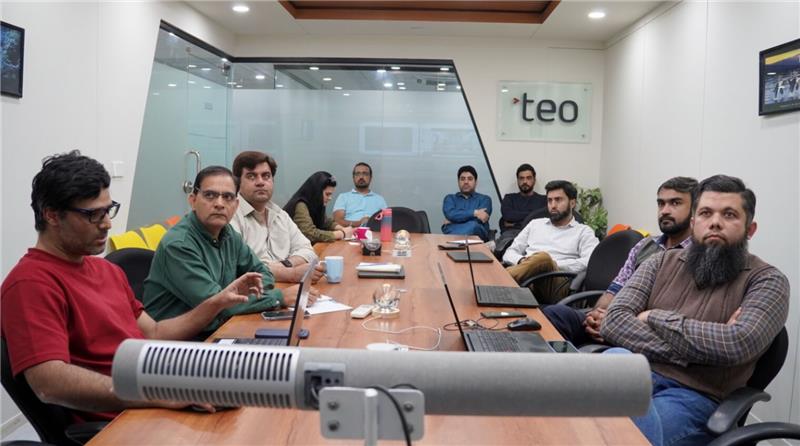
At TEO, we’ve been actively exploring how AI can streamline software development, especially on the frontend side. Recently at Tech Talk, our team shared a demo that showed how deeply AI is now integrated into our development workflow.
This blog summarizes what we showcased, what we’ve learned, and how AI is already helping us ship better, faster, and more consistent software across projects.
From GPT-4.1 to GPT-5.1: A Clear Transformation
When we first adopted GPT-4.1 in our workflows, we quickly realized its limitations:
- It struggled with keeping track of multiple requests
- It often delivered outdated or inaccurate code
- It lacked a full project context
- Output varied heavily in structure and style
With the upgrade to GPT-5.1, the difference has been remarkable. The model now provides:
✓ Better Code Consistency
The code generated aligns with our internal patterns, naming conventions, and Angular architecture.
✓ Stronger Context Retention
GPT-5.1 understands the entire project structure before generating new modules, routes, or components.
✓ Accurate Routing & UI Generation
It can generate real, usable UI components and correctly map routing based on our requirements, something GPT-4.1 struggled with.
This upgrade has helped us reduce friction and has made AI a more reliable partner in front-end development.
The Role of Prompt Engineering: Why It Matters
One of the biggest takeaways from our AI journey is this:
“The quality of output depends directly on the quality of the prompt”.
We refined our approach using:
1. Project-Based Templates
These templates give the model complete context: folder structures, services, interfaces, workflows, and architectural rules.
This dramatically improves accuracy.
2. Structured Prompts for Angular Workflows
Our prompts now include:
- Module requirements
- Routing structure
- UI component patterns
- CRUD logic
- Validation rules
The result?
“Cleaner, more consistent, production-ready code on the first attempt”.
AI in Project Bootstrapping: Getting Started Faster
Starting a frontend project typically includes repetitive groundwork:
- Creating folders
- Setting up modules
- Linking services
- Building initial UI and routing
With AI agents, much of this is now automated.
AI now helps us:
- Auto-generate project scaffolding
- Standardize folder structures
- Reduce manual setup time
- Maintain consistency across all applications
This allows our developers to focus more on real feature development instead of boilerplate tasks.
AI-Driven Angular Workflows
During our demo, our team showcased how AI supports end-to-end feature development in Angular.
Some examples:
- Creating and linking new components
- Automatically generating routing
- Building a complete Admin Panel UI
- Generating CRUD modules within minutes
- Producing reusable services and patterns
These improvements help developers move from concept to working UI rapidly and with fewer errors.
Architectural Impact: Better, Cleaner, More Predictable Projects
AI has contributed far beyond generating code. It’s helping us establish stronger architectural discipline.
✓ Standardized Folder Structures
No more inconsistent naming or random placement of components.
✓ Reusable Component & Service Patterns
AI understands our design system and reproduces consistent patterns.
✓ Reduction in Architectural Drift
Because AI follows unified templates, every module stays aligned with the original architecture, even when multiple developers contribute.
This creates cleaner, more maintainable applications over time.
Metrics & KPIs: Measuring Real Impact
AI’s contribution to our workflow isn’t theoretical; we see calculable improvements.
1. Time Saved on Setup
Initial project setup time reduced by 60–70%.
2. Fewer Code Review Cycles
With consistent code patterns, review cycles are 20–30% shorter.
3. CRUD Generation Speed
Complete CRUD modules now take minutes instead of hours.
These metrics reinforce that AI isn’t just “helpful”, it’s measurably accelerating delivery.
AI Pair Programming: The New Development Culture at TEO
We’re moving toward a model where AI acts as a pair programmer, supporting developers at every stage.
AI’s roles now include:
- Coding partner: assists in generating features, services, and modules
- Reviewer: highlights inconsistencies or missing logic
- Debugger: identifies common Angular or TypeScript errors
- Generator: builds scaffolding, UI components, and workflows
This hybrid human + AI collaboration is redefining our development culture.
New Developer Skills Required in an AI-Augmented Era
As AI takes on more responsibilities, developers also need to adapt.
Essential skills we now expect:
- Strong prompt-writing techniques
- Ability to validate and refine AI-generated code
- Solid architectural understanding to maintain structure
- Knowing when not to rely on AI
- Ensuring long-term scalability and maintainability
AI does heavy lifting, but developers guide the direction and quality.
A Balanced Look: AI Is Powerful, But Not Perfect
While AI has strengthened our workflow, it’s important to recognize the limitations:
- It still requires human oversight
- Occasional hallucinations can occur
- Over-reliance may lead to architectural issues if not monitored
- AI-generated UI sometimes needs refinement
- Not every task should be automated
We treat AI as a powerful assistant, not a replacement for engineering judgment.
How AI Has Changed Our Workload Distribution
Based on our internal observation:
- 40%: Requirements gathering and planning
- 20%: Actual coding
- 40%: QA and validation
AI handles repetitive engineering tasks, while developers handle logical decisions, architecture, and quality control.
The Future at TEO: Smarter, Faster, AI-Enhanced Development
Our approach at TEO is simple: “Improve speed without compromising quality”.
AI isn’t replacing developers; it’s augmenting their capabilities, reducing friction, and making software delivery more efficient.
This is just the beginning. As we continue building AI-driven workflows, our goal is to set new standards for how modern front-end development should look.
Do you want to unlock the full potential of AI in your organization?
Contact us to learn how we can help you with our expertise in AI and software development
 LinkedIn